TIGHT JEANS (2008)
TIGHT JEANS (2008)
Dir. Destiny Ekaragha
★★★★☆
CINEMATOGRAPHY/EDITING
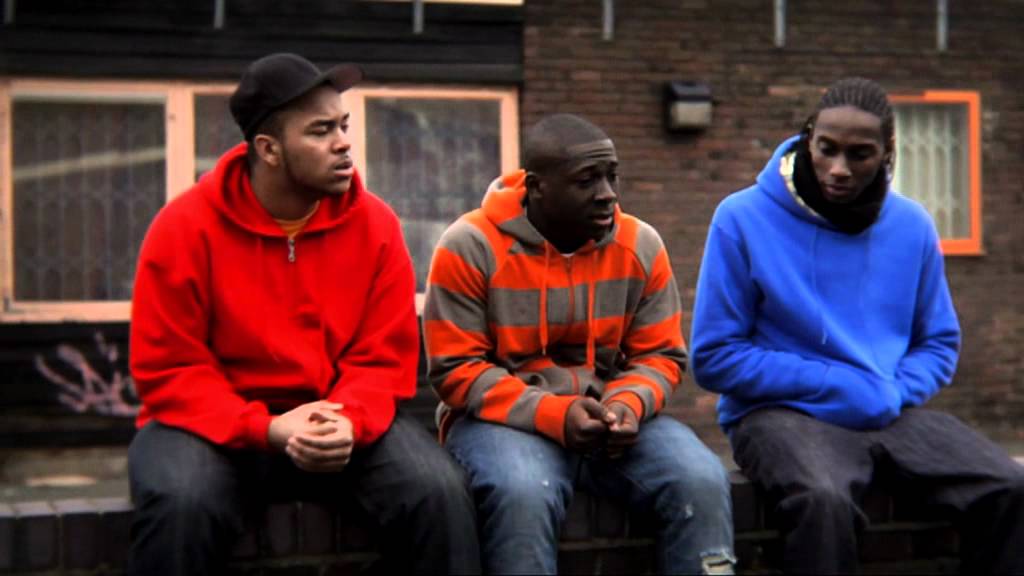
In Tight Jeans, the use of extended long takes combined with a slow, deliberate camera pan enhances the film’s sense of observational realism. Rather than cutting between shots or relying on dynamic editing, the camera gently moves across the three young men seated on a wall, allowing their conversation to unfold organically. This restrained visual style captures the unfiltered rhythms of everyday speech — including silences, overlaps, and sudden bursts of laughter — lending the film a heightened sense of naturalism. The slow pan serves not just to guide the viewer’s attention, but also to establish a contemplative pace that mirrors the unhurried flow of the dialogue. By resisting overt stylisation, the film positions the audience as silent observers, drawing them into the intimacy of the moment. Set against the backdrop of a London estate, this minimalistic approach underscores how mundane public spaces become sites for casual yet revealing exchanges. In doing so, it explores themes of youth, masculinity, and social identity through a lens of quiet, understated social realism.
REPRESENTATION
In Tight Jeans, representation centres on the everyday experiences of young Black British men, offering a grounded and nuanced portrayal of their lives. Set in a public space on a London estate, the film follows a casual conversation between three friends, allowing their personalities, humour, and cultural perspectives to emerge organically. Through this minimalist setup, the film challenges the often narrow and stereotypical portrayals of Black youth by highlighting their individuality and the ordinary rhythms of daily life. The relaxed, observational style avoids sensationalism and instead foregrounds authenticity, creating space for Black British voices to be heard in an unfiltered and relatable way. This representation of race is further deepened through the characters’ light-hearted yet insightful dialogue, which briefly touches on the historical legacy of slavery. A passing reference to slavery, delivered with humour, introduces a moment of reflection — revealing how historical trauma continues to influence cultural identity and social awareness. The blending of comedy with historical consciousness illustrates how the legacy of slavery still shapes the perspectives of younger generations navigating identity in a post-colonial British context. In this way, Tight Jeans offers a more layered and respectful representation of race and urban youth in contemporary British cinema.
Comments
Post a Comment